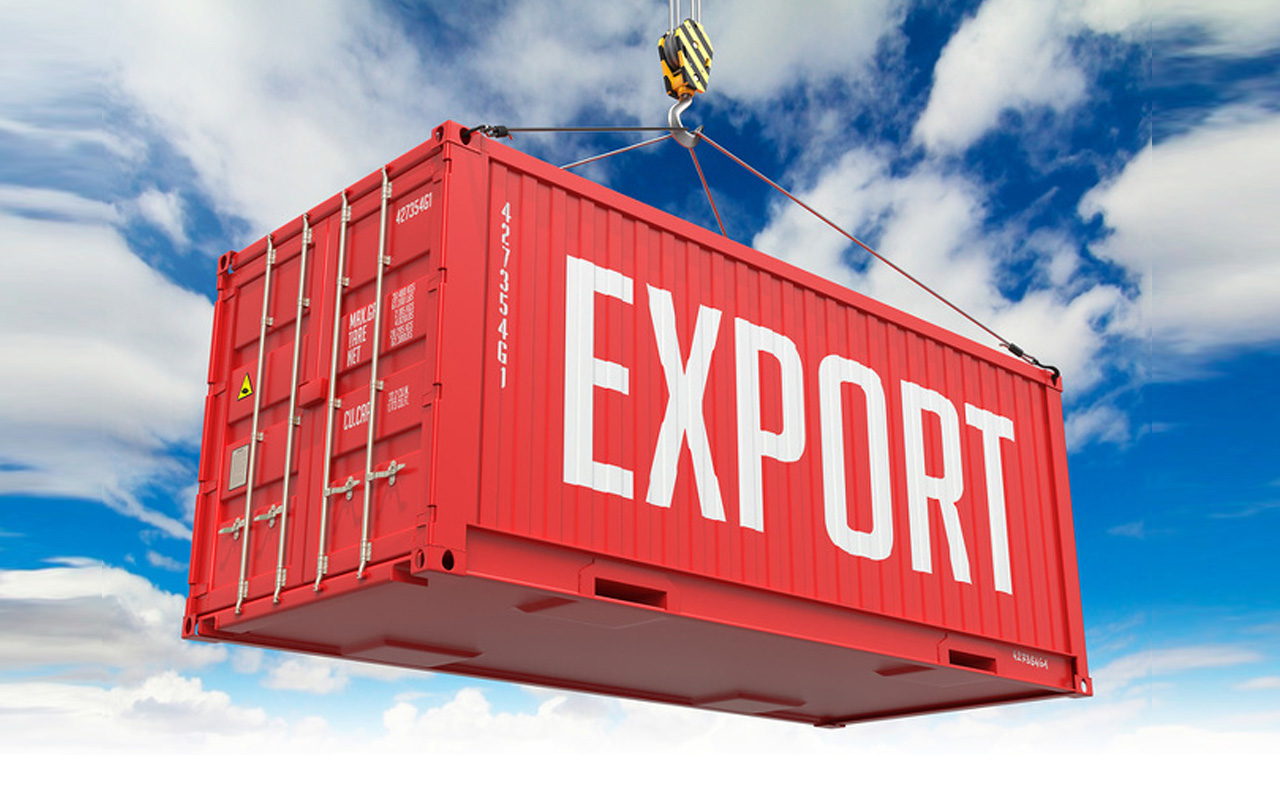
In early January 2026, the Indian government announced a ₹7,295 crore export credit support package designed to strengthen exporters’ access to affordable capital. Far from a routine policy tweak, this intervention—spanning fiscal years 2025–31—signals a deeper strategic shift in India’s approach to trade finance and global competitiveness.
But the impact will not be evenly felt, and beneath the headline numbers lie critical questions about long-term industry resilience, market distortions, and the future shape of export-led growth in India.
A New Phase in Export Policy: Context and Motivation
India’s export ecosystem, particularly for Micro, Small and Medium Enterprises (MSMEs), has long grappled with uneven access to credit. High borrowing costs—often between 9.5% and 12.5% for export loans—can erode margins, stifle risk-taking, and dampen global ambitions.
This package has two main components:
- Interest subvention of ₹5,181 crore, subsidising part of the cost of pre- and post-shipment export loans.
- Collateral support worth ₹2,114 crore, offering government-backed guarantees so exporters can borrow without heavy asset pledges. :contentReference
Together, these measures aim to lower the effective cost of trade finance and unlock working capital for exporters—particularly those previously shut out of competitive loan markets.
This is the second major plank of the broader ₹25,060 crore Export Promotion Mission approved in November 2025; the first was a ₹4,531 crore market access support scheme rolled out at the end of December.
Who Benefits Most—and Why It Matters
MSME Exporters: Immediate Relief
At the forefront of beneficiaries are India’s smaller exporters—firms with limited balance sheets and high reliance on bank credit to finance inventories, raw materials, and international shipments.
- Interest subsidy limits (roughly 2.75%) will blunt borrowing costs that have historically made Indian goods less price-competitive abroad. :contentReference[oaicite:4]{index=4}
- Collateral guarantees of up to ₹10 crore will help firms without large fixed assets access loans they previously could not secure.
For these businesses, the move is more than a temporary cash infusion; it could reshape financing norms and enable growth that was previously credit constrained.
Exporters in Strategic Sectors
The policy extends support to exporters in priority sectors, including defence and SCOMET (Special Chemicals, Organisms, Materials, Equipment and Technologies) products—a nod to sectors with both high value and geopolitical significance.
Subsidised finance may help Indian firms penetrate niche global markets where high compliance costs and competitive financing are barriers to entry.
Who May Lose—or Be Left Behind
Large Exporters May Feel Neglected
The structure of the scheme skews support toward smaller players and specific product lists. Large exporters with diversified financing structures might receive limited direct benefit, potentially widening competitiveness gaps within sectors.
Market Distortion Risk
Subsidies, while helpful in the short term, can introduce pricing distortions in capital markets. Commercial lenders may become less inclined to innovate export finance products if government support becomes the default cushion, crowding out private sector solutions.
This could slow the evolution of trade finance markets at a time when global financing products—from supply chain finance to fintech-driven credit—are rapidly advancing.
Non-Eligible Exports
Not all export categories are covered; restricted items, waste and scrap, and production-linked incentive (PLI) products are excluded. Firms operating outside the “positive list” may find themselves at a competitive disadvantage, especially if global rivals receive comparable support from their governments.
Broader Impacts on Indian Trade and the Economy
Reducing Reliance on Debt at High Rates
By lowering effective financing costs, the package could reduce reliance on expensive working capital loans, particularly from non-bank financial institutions that charge higher rates. Over time, this may help improve asset quality on lenders’ books and expand credit availability for other sectors.
Export Diversification and Resilience
Access to affordable credit can empower exporters to diversify markets beyond traditional destinations. This is particularly significant in the face of rising trade tensions and tariff barriers (e.g., recent high tariffs imposed by global partners) that have squeezed margins. Financial support may encourage firms to explore Latin America, Africa, and other emerging markets.
Long-Term Productivity and Innovation
With financing constraints eased, exporters may invest in technology upgrades, quality certifications, and supply chain efficiencies that were not financially feasible before. This could boost the global competitiveness of Indian products in the years to come.
Hidden Implications: Financial and Policy Risks
Fiscal Exposure and Moral Hazard
A credit guarantee scheme shifts risk from banks to the government balance sheet. If defaults rise—especially in volatile global markets—public finances may absorb unexpected costs.
Implementation Complexity
Operational success hinges on clear guidelines from the Reserve Bank of India and the Directorate General of Foreign Trade (DGFT). Delays or ambiguity in execution could blunt intended impacts, leaving exporters frustrated and markets unchanged.
What Comes Next
This package is not an endpoint but a structural pivot:
- Policy calibration will matter. Regular evaluation of subsidy effectiveness and market responses will be key.
- Integration with other export incentives (like duty credits and market access schemes) can amplify impact if coordinated well.
- Private sector partnership—especially from banks, insurers and fintech providers—will determine how far finance innovation can go beyond state support.
India’s exporters have long cited credit bottlenecks as a deterrent to scaling globally. This ₹7,295 crore thrust is a step toward unlocking that potential—but the road ahead will test whether targeted support can foster lasting competitiveness rather than temporary relief.
By reframing export policy as an instrument of competitive strategy—not just fiscal support—India may be laying foundations for a more resilient, diversified trade ecosystem. The real question now is: can this capital infusion catalyse structural change, or will it merely paper over deeper financial frictions?


![# Why India’s Stock Market Is at a Turning Point — and What It Means for 2026 Recent data points show Indian equity markets poised for a potential rebound — with benchmark indices likely to open higher on optimism around corporate earnings growth. That’s not just a short-term mood boost: it reflects deeper shifts in how investors are valuing India’s economic momentum as the new year begins. ([Reuters][1]) But beyond the surface bump in futures, the evolving narrative of Indian markets tells a story of **winners and losers, cross-currents in flows, and risks that could shape finance and business well into 2026**. --- ## 📈 The Bulls: Domestic Growth and Earnings Momentum **Why optimism is rising** After a subdued 2025 — when India’s equities lagged global peers despite strong macro data — analysts increasingly point to earnings as the driver of the next leg up. Corporate profits have started to improve across sectors, and futures pricing indicates that benchmarks could open higher, even as heavyweights like Reliance Industries and HDFC Bank temper gains. ([Reuters][1]) Broader forecasts outside the immediate news support this view. Brokerages such as Jefferies and Morgan Stanley see profit per share growth accelerating in FY27 and beyond, with key sectors like banking, autos and telecom leading the charge. Some projections even envisage **double-digit EPS growth** as a foundation for fresh market advances. ([ETCFO.com][2]) **Who benefits** * **Corporate India with strong domestic demand:** banks, automobiles, telecom companies and consumer discretionary players are set to reap gains from improving sales and margins. * **Domestic institutional investors:** with foreign flows fickle, robust month-by-month inflows from mutual funds, pension funds and insurance investors help underpin prices and limit volatility. ([ETCFO.com][2]) * **Mid- and small-caps (conditional):** these segments may benefit if earnings trends broaden beyond blue-chips, though valuations and liquidity still matter. --- ## 🧠 A Cautionary Signal: Foreign Investors and External Risks **Foreign money remains a mixed story** While domestic flows are structurally strong, foreign institutional investors (FIIs) have been selling Indian equities for much of 2025. That pattern has left India’s market ownership among the lowest levels in years — a vulnerability if earnings disappoint or global risk aversion rises. ([Business Recorder][3]) Trade tensions with the U.S., particularly over tariffs and energy imports, have also clouded sentiment, capping gains despite stronger earnings figures. Geopolitical influences aren’t short-term headlines: they shape how willing international capital is to commit long-term. ([Reuters][4]) **What this means long-term** * **Volatility could persist.** India’s stock market might keep oscillating with foreign investor sentiment even if domestic fundamentals strengthen. * **Sectoral divergence.** Export-oriented and globally sensitive sectors (IT or pharma) may underperform versus domestic demand plays. --- ## 📊 Macro Fundamentals Still Matter India’s broader economy remains a key driver of market prospects: * Long-term growth forecasts remain robust, with GDP expected to stay near or above ~7% in FY27. ([The Times of India][5]) * Inflation and interest rate trajectories will influence corporate cost structures and valuations. * Policy reforms — such as GST adjustments, potential trade deals and infrastructure incentives — could make earnings more predictable. These factors contribute to the idea that **2026 could mark not just a bounce but a structural phase in market evolution** where earnings, not liquidity, dictate valuations. ([Fortune India][6]) --- ## 🧩 Hidden Implications: Currency & Foreign Exchange Another critical piece rarely highlighted in headlines is the currency picture. The Indian rupee has shown volatility against a strengthening dollar, partly due to global rates and capital flows. Central bank intervention offers some support, but a weaker currency can squeeze corporate profits, especially for import-dependent firms. ([Reuters][7]) **Why this matters** * **Exporters can gain cost competitiveness**, potentially boosting earnings. * **Import-reliant sectors face margin pressure**, damping enthusiasm among investors. * For foreign investors, currency risk overlays equity return prospects — influencing allocation decisions. --- ## 📅 What’s Next: Scenarios to Watch in 2026 ### Winning outcomes * **Sustained earnings acceleration** across sectors * **Return of foreign capital** with clearer global trade dynamics * **Policy clarity on trade and tax reforms** ### Challenges * **Global macro shocks** (e.g., slowing U.S. growth, oil price spikes) * **Domestic inflation surprises**, forcing tighter policy * **Unresolved geopolitical tensions** For investors and business leaders alike, 2026 is shaping up not as a simple continuation of 2025, but as a **pivotal transition**: where profit performance, capital flows and global linkages interact to define long-term direction. --- In short, the current optimism in Indian markets is not just fleeting anticipation of quarterly numbers — it reflects deeper realignments that could influence investment strategies, corporate planning and the broader economic narrative for the year ahead. [1]: https://www.reuters.com/world/india/indian-shares-likely-open-higher-earnings-growth-optimism-2026-01-06/?utm_source=chatgpt.com "Indian shares slip from near record highs as Reliance, HDFC Bank weigh" [2]: https://cfo.economictimes.indiatimes.com/news/jefferies-says-indian-shares-set-for-better-2026-on-earnings-domestic-flows/125928841?utm_source=chatgpt.com "Indian Shares to Prosper by 2026: Jefferies Anticipates Earnings Surge and Strong Domestic Flows, ETCFO" [3]: https://www.brecorder.com/news/40400840?utm_source=chatgpt.com "Indian shares likely to open higher on earnings growth optimism - Markets - Business Recorder" [4]: https://www.reuters.com/world/india/indian-equities-open-flat-geopolitical-tensions-offset-earnings-optimism-2026-01-07/?utm_source=chatgpt.com "Indian shares decline as geopolitical tensions overshadow earnings optimism" [5]: https://timesofindia.indiatimes.com/business/india-business/india-growth-outlook-economy-may-grow-6-9-in-fy27-goldilocks-phase-likely-to-continue/articleshow/126371536.cms?utm_source=chatgpt.com "India growth outlook: Economy may grow 6.9% in FY27; 'Goldilocks' phase likely to continue" [6]: https://www.fortuneindia.com/markets/market-outlook-2026-earnings-domestic-demand-to-power-next-leg-of-sensex-nifty/129179?utm_source=chatgpt.com "Market outlook 2026: Earnings, domestic demand to power next leg of Sensex, Nifty" [7]: https://www.reuters.com/world/india/rbi-support-cushion-india-rupee-downside-amid-asia-softness-2026-01-07/?utm_source=chatgpt.com "RBI support to cushion India rupee downside amid Asia softness"](https://deshtimestv.com/wp-content/uploads/2026/01/Why-Indias-Stock-Market-Is-at-a-Turning-Point-—-and-What-It-Means-for-2026-150x150.jpg)

